
They say that truly good manners should be invisible—natural, smooth, and so deeply ingrained that they appear effortless. In the modern world, the dinner table remains one of the few places where our social intelligence and professional polish are on full display. Whether you are closing a high-stakes business deal at a Michelin-starred restaurant or sharing a cozy, intimate meal with close friends, the way you carry yourself speaks volumes.
The goal of modern etiquette is not to be robotic or stuck in the past; it is about moving with quiet confidence and making those around you feel comfortable. It is about respect—for the food, the chef, and the company. Let’s break down the 12 essential pillars of modern dining that every grown-up should master to navigate any table with timeless class.
1. The Sauce Secret: Elevating the Bread-and-Fork Technique
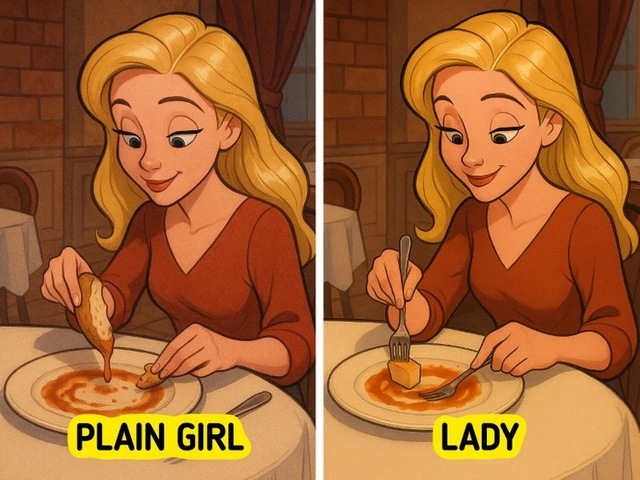
We have all been there—the main course is finished, but a pool of world-class sauce remains on the plate. In a casual setting, you might be tempted to swipe it with a finger, but true elegance requires a more surgical approach. The professional move is to use a small piece of bread as a “spacer.”
Instead of holding the bread in your hand, place a bite-sized piece on the tines of your fork. Use the fork to gently gather the sauce. This technique signals intentionality and a deep appreciation for the chef’s work without the “drama” of messy fingers. It’s a subtle signal of class that proves you know how to savor a meal with precision.
Watch the transformation—see how mastering these simple table manners can instantly elevate your social presence.
2. Thermal Patience: The Art of Letting the Plate Breathe
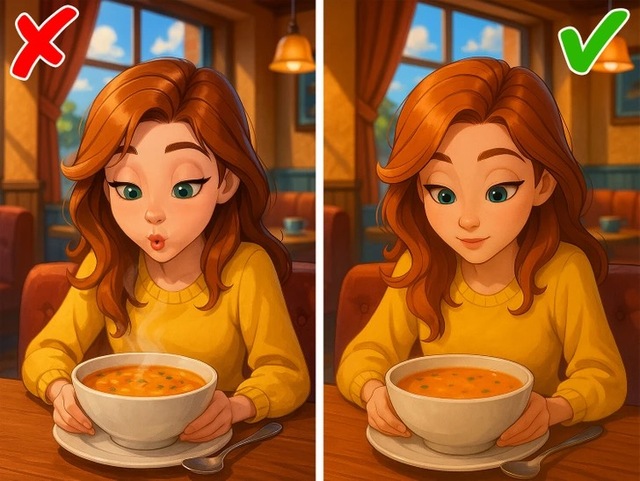
There is nothing quite as disruptive to a sophisticated dinner conversation as someone blowing frantically on a spoonful of soup as if they are trying to start a campfire. If your food arrives at a temperature that could melt steel, the answer is simple: patience.
Resisting the “campfire blow” is a mark of self-control. Letting the plate breathe for a minute or two allows you to engage in the conversation rather than focusing solely on the heat. In a casual setting, you might ask for an ice cube for a boiling drink, but for solid food, the wait is the only polished path. Your taste buds—and your reputation—will thank you.
3. The Contextual Shift: Decoding the “French Fry” Dilemma

One of the most common etiquette stumbles involves knowing when to use your hands. French fries are the ultimate litmus test. In a casual setting where you are eating a burger or a sandwich, using your hands is perfectly acceptable. However, if those same fries are served alongside a high-end steak or in a formal environment, you must switch to your silver.
It is all about matching your style to the dish. Just as you wouldn’t wear sneakers with a tuxedo, you shouldn’t use your bare hands for a side dish that accompanies a formal main course. Let the primary protein guide your utensil choice; if it requires a fork and knife, your fries do too.
4. The Minimalist Cut: Escaping the “Toddler Prep” Habit
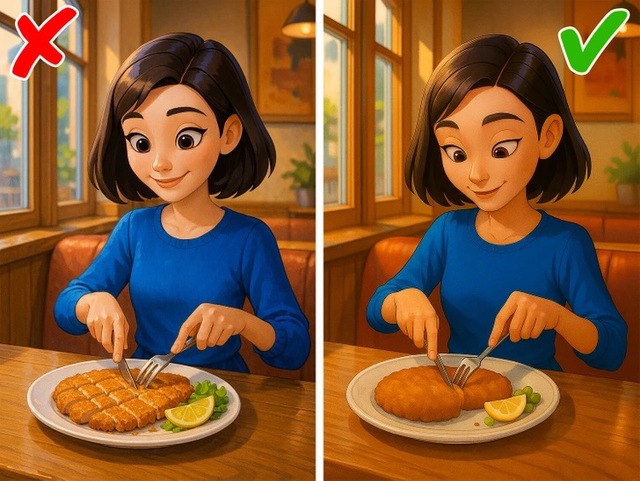
Nothing clutters a plate faster than pre-slicing an entire meal into small cubes. This is often referred to as “toddler prep,” and it immediately diminishes your professional silhouette. The rule is to cut only what you are about to eat—one bite at a time.
This approach maintains the visual integrity of the chef’s presentation and ensures that your food stays warm longer. Furthermore, when you take that bite, ensure it is a clean, singular motion. Avoid leaving food dangling or struggling with oversized portions. A minimalist cut shows a level of confidence and poise that “prepping” simply cannot match.
Refine your technique—watch this guide to see why a single, clean motion is so much more elegant than a cluttered plate.
5. The “BMW” Blueprint: Never Reaching for the Wrong Glass Again

In a crowded, multi-course dinner, the geometry of the table can become confusing. Which water glass is yours? Which bread plate belongs to the person on your left? To avoid an awkward social stumble, remember the “BMW” blueprint: Bread, Meal, Water.
Working from left to right, your bread plate is on the left, your meal is in the center, and your water/drinks are on the right. If you need a physical reminder, make the “OK” gesture with both hands under the table. Your left hand forms a small “b” (bread) and your right forms a “d” (drink). This secret mental shortcut ensures you never accidentally steal your neighbor’s sourdough again.
6. The “Reverse Entry” Rule: Handling Hidden Bones and Pits
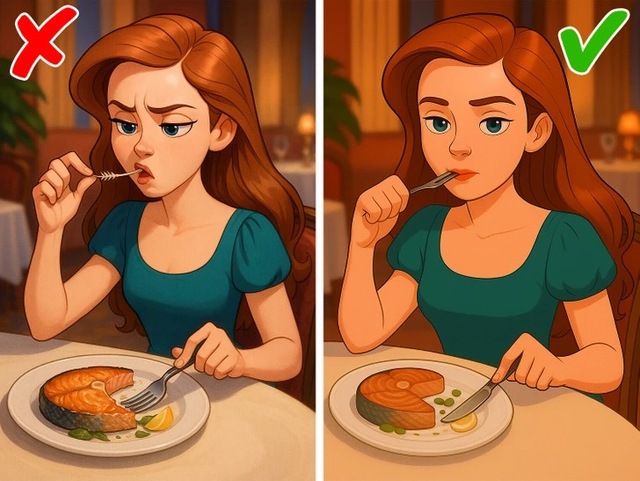
Discovering a stray fish bone or an olive pit mid-sentence can be a moment of panic. The golden law of etiquette is “reverse entry”: however the food went in, that is how it must come out. If you used a fork to put the food in your mouth, use the fork to discreetly remove the bone. If you used your hands (for an olive, for example), use your fingers.
The goal is to handle the situation without a “scene.” Avoid spitting into a napkin or using your fingers to fish around while you are still talking. A quick, graceful removal followed by placing the item on the side of your plate is the most professional way to maintain the flow of the evening.
7. The Lap Narrative: Managing the Napkin from Start to Finish

Your napkin is more than a tool for cleanliness; it is a communication device. During lunch, it is common to unfold it fully. At dinner, however, you should fold it in half and place it neatly on your lap with the fold facing you. This allows you to use the inside of the fold to dab your mouth, keeping the exterior—and your lap—looking pristine.
If you must leave the table mid-meal, place the napkin on your chair. This “chair signal” tells the staff and your guests that you intend to return. When the meal is officially over, place the napkin to the left of your plate. Do not crumple it or attempt to fold it into origami; just a neat, clear placement is all that is required.
8. The Chef’s Respect: Why You Should Never Salt Before the First Bite
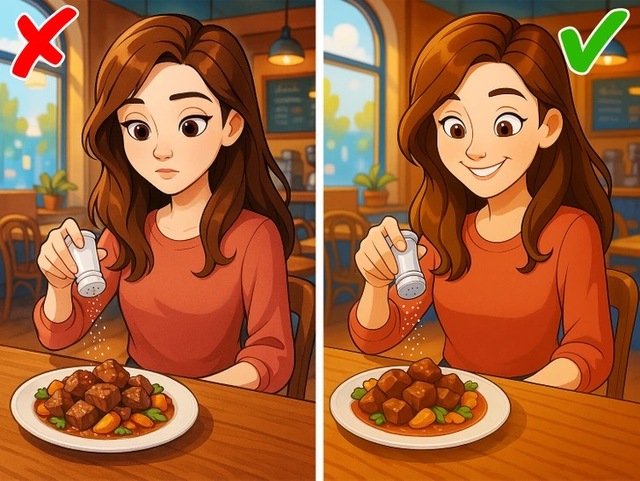
In upscale dining, the seasoning of a dish is a carefully calculated art form. When you reach for the salt shaker before even tasting the food, it can be interpreted as a lack of respect for the chef’s expertise. It suggests that you assume the food is under-seasoned.
Always take at least one bite first. If you truly feel it needs more, do not “shower” the entire plate. Lightly sprinkle a small amount of salt or Parmesan onto the side of the plate and dip each bite as needed. This keeps your station tidy and allows you to control the flavor profile without insulting the kitchen.
9. Dab, Don’t Wipe: Protecting the Glass and the Gaze

Using a napkin should be an act of discretion, not a deep-cleaning mission. The “Dab, Don’t Wipe” technique is essential, especially before you take a sip from a glass. Lightly dabbing the corners of your mouth prevents greasy smudges from transferring to the rim of your wine or water glass.
Furthermore, remember that hydration at the table is a marathon, not a desert crossing. Take small, graceful sips rather than large gulps. Keeping your glass clean and your sips controlled contributes to the overall “quiet confidence” that defines a high-value guest.
10. The Bread-Tear Ritual: Avoiding the “Mangle” Trap
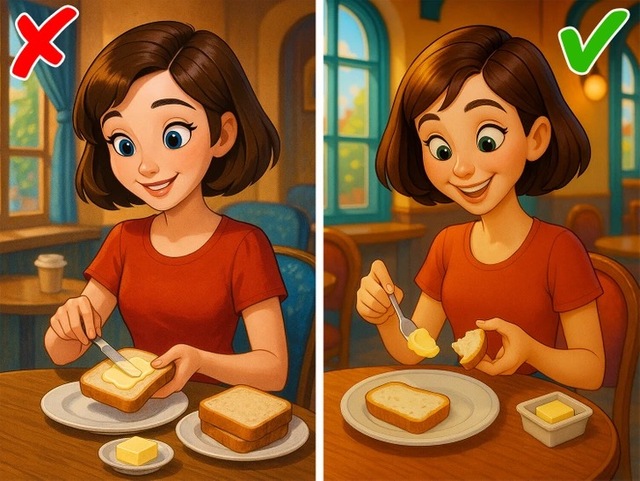
Bread is often the first thing served, and it is the first opportunity to show your mastery of dining arts. Never bite directly from a whole roll, and never butter the entire slice at once like you are making a sandwich.
The correct ritual is to tear off a bite-sized piece, butter it while it is on your plate (not in mid-air), and then eat that piece in one motion. This “in-air” buttering ban keeps crumbs from flying across the table and prevents messy spreads on your fingers. It is a slow, deliberate process that demonstrates you are a person of patience and refinement.
11. The Right-Hand Flow: Mastering the Thoughtful Dish Pass

In a formal setting, the flow of the table usually moves to the right. When passing a heavy platter, avoid the “mid-air balance act” which can lead to spills. Instead, place the dish on the table in front of the next person.
When it comes to the bread basket, hygiene is paramount. Use the provided linen cloth to hold the loaf while you cut a few slices for yourself, then pass the basket along. Never touch communal food with your bare hands. This thoughtful approach ensures that everyone feels comfortable and the meal continues smoothly.
12. Retiring the Pinky: Debunking the Medieval “Tea Lift” Myth

We have all seen the cartoons—the elite sipping tea with a pinky finger extended high in the air. In reality, this is not a sign of class; it is an outdated myth. The “pinky lift” actually dates back to medieval times when spices were expensive and people kept one finger clean to dip into seasoning.
In a modern setting, an extended pinky looks forced and awkward. The most graceful way to hold a teacup or any glass is with all fingers tucked comfortably. This provides a more stable grip and a more modern, grounded aesthetic. Elegance is about comfort and stability, not mimicking 15th-century spice habits.
Final Thoughts: Good Manners are the Ultimate Form of Respect
At the end of the day, mastering the art of dining is not about snobbery or trying to look “fancy.” It is about social intelligence. These 12 pillars are designed to ensure that the mechanics of eating never distract from the beauty of the human connection occurring at the table.
When you master these rules, you move from being a “robotic” diner to a “polished” peer. You present yourself with a quiet confidence that others will notice—not because you are showing off, but because you are making the experience better for everyone involved. Whether you are at a backyard barbecue or a Michelin-starred gala, grace is the one thing that never goes out of style.